Manual Driving Lessons: How Much They Cost, How Many You Need and What to Expect in 2026
The Quick Answer
Manual driving lessons with Kinetic Driving School cost from £32 an hour. The DVSA says the average learner needs around 45 hours of professional lessons, so budget roughly £1,440 in lessons plus £119 in official fees (provisional licence, theory test and a weekday practical test). Pass in a manual car and your licence covers both manual and automatic cars for life.
Learning to drive a manual can sound daunting. There is a clutch, a gear stick and a lot of advice from people who learned in the 1990s. The good news is that every manual driver you know started exactly where you are now, stalling at a junction and wondering if they would ever get it. This guide explains in plain English what manual lessons cost, how many you will need, what happens lesson by lesson and how to get past the tricky bits quickly.
What are manual driving lessons?
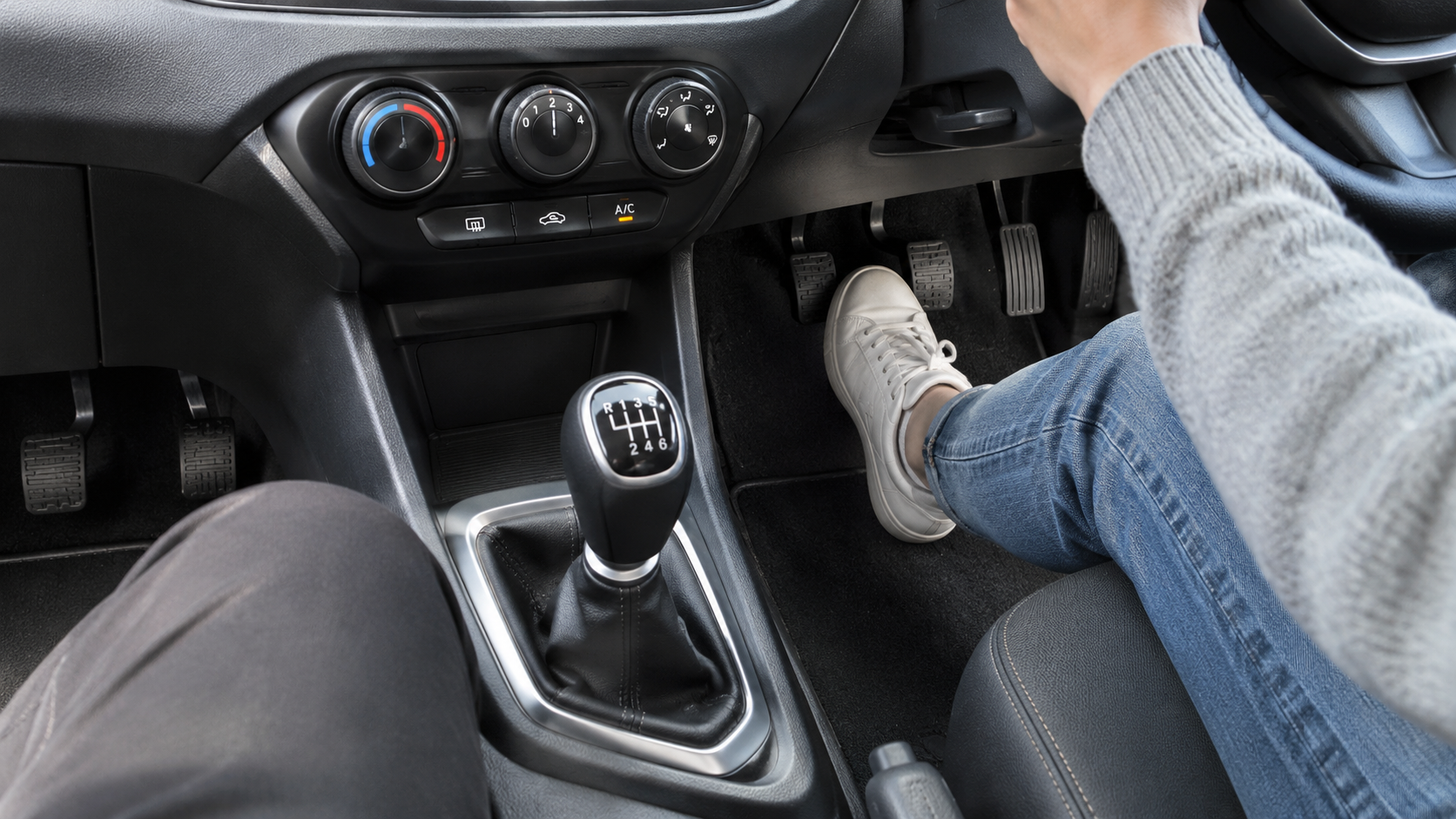
Manual driving lessons teach you to drive a car with a clutch pedal and a gear stick, where you choose and change gears yourself. You learn in a dual controlled car with a DVSA approved instructor who can brake if needed. When you pass a test taken in a manual car, your full licence lets you drive both manual and automatic cars. If you pass in an automatic instead, you get a restricted licence (code 78) that only covers automatics.
How much do manual driving lessons cost?
With Kinetic Driving School, manual lessons start from £32 an hour. Here is what a typical journey to a full licence adds up to:
| Item | Cost | Notes |
| Manual lessons (about 45 hours) | About £1,440 | From £32 per hour. The 45 hours is the DVSA guide for an average learner |
| Provisional licence | £34 online | £43 by post |
| Theory test | £23 | Car theory test fee |
| Practical test | £62 weekday | £75 evenings, weekends and bank holidays |
| Typical total | About £1,560 | Lessons plus £119 in official fees |
Prices vary a lot across the UK. Recent industry figures put the national average at around £39 an hour for manual, so £32 is a genuine saving. Booking lessons in blocks is the easiest way to keep the cost down, and you can see current deals on our driving lesson offers page or the full breakdown on our pricing page. If you want to model your own total, try our driving lesson cost calculator.
How many manual driving lessons will I need?
Most learners need around 45 hours of professional lessons, plus about 22 hours of private practice, according to DVSA guidance. That is an average, not a target. Some people are test ready in 30 hours and others need 60, and neither is a sign of how good a driver you will be.
These are the things that change your number the most:
- How often you drive. Two lessons a week usually beats one, because you forget less between sessions.
- Lesson length. Two hour lessons give you time to leave the quiet streets and tackle real roads.
- Private practice. Extra hours with a family member in their insured car can cut the paid hours you need.
- Your confidence. Anxious learners often spend more time on clutch control at the start, and that is completely normal.
For a deeper look at the numbers, read our guide on how many driving lessons you need. If your week is unpredictable, our post on flexible driving lessons shows how to fit lessons around work and study.
What happens in manual driving lessons?
Every learner is different, but this is the path most pupils follow. Your instructor will set clear goals for each lesson so you always know what you are working towards.
| Stage | What you learn | Typical hours |
| 1. Controls and moving off | Cockpit drill, finding the biting point, moving off and stopping smoothly | Lessons 1 to 4 |
| 2. Gears and steering | Changing up and down, steering, mirrors, signals, residential roads | Lessons 5 to 10 |
| 3. Junctions and roundabouts | Emerging safely, reading road signs, lane discipline, hill starts | Lessons 10 to 20 |
| 4. Manoeuvres | Parallel park, bay park, pull up on the right, turn in the road | Lessons 15 to 30 |
| 5. Faster roads and independent driving | Dual carriageways, following a sat nav, emergency stop | Lessons 25 to 40 |
| 6. Test preparation | Mock tests, show me tell me questions, fine tuning | Final 5 to 10 hours |
The hour ranges are a guide only. If you have never sat in a driving seat before, our guide to what happens on your first driving lesson walks you through the first hour.
How do I stop stalling in a manual car?
You stop stalling by learning where the biting point is and practising a slow, smooth clutch release. Stalling is the number one worry for new manual drivers, and it happens to everyone. It simply means the engine was asked to move the car before the clutch had finished connecting. Here is how we coach it:
- Find the biting point. Press the clutch down, select first gear, then lift the clutch slowly until you feel the engine note dip and the car try to creep. That is the biting point.
- Hold it there. Pause at the biting point and check around you before you add any gas. Nothing is rushed.
- Add a little gas, then release. Gentle gas, then lift the clutch smoothly over a second or two. Quick lifting is the cause of most stalls.
- Practise on a flat, quiet road. Moving off and stopping thirty times in a row builds muscle memory faster than any amount of theory.
- Treat a stall as feedback. Handbrake on, clutch down, neutral, restart. Your instructor can help with the dual controls, and the examiner will not fail you for a single stall.
Hill starts are the second big hurdle. We teach the handbrake method: find the biting point, release the handbrake as the car lifts slightly, then add gas. After a handful of tries it becomes automatic, no pun intended.
What is the pass rate for manual driving tests?
Nationally, around 48% of manual tests are passed, compared with around 43% of automatic tests, according to passrates.uk (2026). That gap surprises many people, and it is mostly explained by who takes each test. Roughly one in five UK driving tests is now taken in an automatic, and many of those learners book early because “no gears” feels like less to learn. Roundabouts, junctions and hazard awareness are identical in both, so passing is about being fully ready, not about the gearbox.
Is it better to learn manual or automatic?
It depends on your goals. Manual gives you maximum freedom, because the licence covers both car types. Automatic can be quicker and less stressful to learn, and most new cars sold now are automatic. Here is a quick comparison:
| Manual | Automatic | |
| Price from (Kinetic) | £32 per hour | £34 per hour |
| Licence you get | Manual and automatic cars | Automatic cars only (code 78) |
| Hours to test ready | Around 45 on average | Often fewer |
| Hill starts and stop start traffic | Need clutch control | Much easier |
| Best for | Anyone who wants the widest choice of cars, cheaper used cars and hire cars abroad | Nervous learners and future electric car drivers |
Many people think about switching mid way. If you start in a manual and find the clutch is getting in the way, you can move to automatic at any time. Going the other way, from automatic to manual after you pass, typically takes around 10 to 20 hours of manual lessons. Our detailed guide to automatic vs manual driving lessons will help you decide, or you can look at our automatic driving lessons directly.
Can I learn to drive a manual car quickly?
Yes. An intensive driving course packs your lessons into days or weeks, and learning every day means the clutch skills stick. Intensive manual courses suit people who have passed their theory test and can take time off work or study. Be wary of anyone who offers a guaranteed test date and asks for your DVSA login, because learners must book and manage their own practical test.
How do I choose a manual driving instructor or driving school near me?
Before you book with anyone, check these five things:
- They are DVSA approved. A fully qualified Approved Driving Instructor (ADI) displays a green badge. A trainee displays a pink one.
- They plan each lesson. A good instructor sets goals and tracks your progress rather than just driving you around.
- Modern, dual controlled cars. Every Kinetic car is dual controlled and regularly serviced.
- Clear pricing. Ask whether blocks are discounted and whether there are any extra fees.
- A choice of instructor. You can request a male or female instructor, subject to availability.
Kinetic Driving School teaches across Kent, Essex, Cambridgeshire, Dorset and beyond. Browse our full list of areas to find an instructor near you, or read our guide to the best driving school in Kent.
What happens after I pass my manual test?
Passing is the start, not the finish. Plenty of new drivers feel nervous about motorways, night driving and bad weather. Pass Plus is a short course that covers those situations, and some insurers offer a discount for completing it. Our guide to Pass Plus costs and savings shows whether it is worth it for you.
Book manual driving lessons today
Ready to get going? Kinetic Driving School offers manual driving lessons from £32 an hour with friendly DVSA approved instructors, plus automatic lessons from £34 an hour. Grab an introductory block offer or book your first lesson online. Prefer a chat? Call us on 0333 772 9603.
Frequently asked questions about manual driving lessons
How much are manual driving lessons?
With Kinetic Driving School, manual driving lessons start from £32 an hour. Most learners need around 45 hours, so a typical lesson budget is about £1,440, plus £119 in official licence and test fees.
How many manual driving lessons do I need?
The DVSA suggests an average of around 45 hours of professional lessons plus about 22 hours of private practice. Your own number depends on how often you drive, how long each lesson is and your confidence.
Is it harder to learn to drive a manual car?
Manual is a little harder at the start because you coordinate the clutch, gears and steering. Most learners get comfortable with clutch control within the first 5 to 10 hours, and everything else is the same as in an automatic.
Can I drive an automatic if I pass in a manual?
Yes. A licence gained in a manual car lets you drive both manual and automatic cars. A licence gained in an automatic only covers automatics.
Is it OK to stall during my driving test?
Yes. A single stall in a safe place will not fail you on its own. Examiners care about whether you recover calmly and safely.
Can I switch from manual to automatic lessons?
Yes, you can switch at any time. Tell your instructor and they will move you onto an automatic car, from £34 an hour.
Can I take an intensive manual driving course?
Yes. Intensive manual courses usually take 30 to 35 hours of training and you need to have passed your theory test first. Availability depends on test dates near you.